Queue
STATE OF BRAIN HEALTH IN AMERICA
2024 Muse Brain Health Report
METHODOLOGY: Muse, in partnership with Pollfish, surveyed 5,000 U.S. adults from January 19th to 22nd, 2024. While maintaining the previous focus on self-reported scores across seven key brain health aspects (memory, focus, sleep, mood, productivity, creativity, and overall wellbeing), this survey also explored brain health conditions and related medical and healthcare aspects. This approach aimed to provide a more comprehensive understanding of brain health, combining lifestyle factors with clinical insights. Full methodology here.
KEY AREAS OF BRAIN HEALTH:
BRAIN HEALTH TRENDS
Americans scored themselves on a scale of 1 to 10 for each key area of brain health, ranking themselves highest for memory and focus, whereas sleep and mood ranked lowest, indicating the biggest areas of concern for American's brain health.
Source: Muse 2024 Brain Health Survey
Americans are beginning to turn a corner on their commitment to supporting and improving their brain health.
This is based on the meaningful improvements in self-reported brain health scores over the last two years.
BRAIN HEALTH TRENDS
Source: Muse 2024 Brain Health Survey
BRAIN HEALTH SCORE CHANGES BY GENERATION
*Cumulative scores for brain health were calculated using the combined total scores across the six categories of brain health, for a total potential brain health score of 60.
**Generational comparisons based on groupings from Pew Research, which include Gen-Z (1997-2012), Millennials (1981-1996), Generation X (1965-1980) and Baby Boomers (1946-1964)
While Gen-Z scores have slightly improved from our prior report, they continue to lag behind the other generations. Meanwhile, although millennials scored nearly as low as Gen-Z in 2022, in this year's report Millennials scored the highest when it comes to self-reported brain health scores.
BRAIN HEALTH TRENDS
Source: Muse 2024 Brain Health Survey
Select any of the following to toggle between brain health aspect rankings:
Gen-Z was most likely to feel regularly stressed (65%), burnt out (52%), and lonely (43%). Millennials were most likely to feel overwhelmed, however they were also most likely to feel loved (72%), energized (57%) and appreciated (57%) indicating that their stress-related emotions don't necessarily impact their happiness and mood. Boomers felt positive emotions across the board, with about 70% feeling loved and happy, notably higher than the reported feelings of love and happiness in Gen-Z, which were under 60%.
BRAIN HEALTH TRENDS
Source: Muse 2024 Brain Health Survey
Healthy eating continues to be the most significant source of influence on brain health scores followed by social interaction and participation in leisure activities.
Activities associated with higher perceived brain health include:
Top 10 activities positively associated with brain health
BRAIN HEALTH & PERSONAL WELL-BEING
Source: Muse 2024 Brain Health Survey
Activity
Florida cities continue to lead with the highest overall self-reported brain health scores. On the opposite end, Portland, Oregon ranked the lowest in brain health, particularly in the areas of mood and sleep.
BRAIN HEALTH TRENDS
Source: Muse 2024 Brain Health Survey
Brain Health by State & Top U.S. Cities: Rankings for cumulative brain health and each aspect of brain health
Top States for Brain Health: New Hampshire, South Carolina, Nevada
Top Cities for Brain Health: Miami, Tampa, Charlotte
Eating healthy is by far the most impactful activity when it comes to high brain health scores. In particular, sleep scores are strongly impacted by activities such as healthy eating, going to bed early and even spending time with friends.
BRAIN HEALTH & PERSONAL WELL-BEING
Source: Muse 2024 Brain Health Survey
Activity
Eating healthy is by far the most impactful activity when it comes to high brain health scores. In particular, sleep scores are strongly impacted by activities such as healthy eating, early bedtime and even spending time with friends.
BRAIN HEALTH & PERSONAL WELL-BEING
Source: Muse 2024 Brain Health Survey
Activity
Activity
Activity
Activity
Activity
Activity
While only 14% of respondents say they practice meditation daily, the results show that consistency in meditation is more beneficial than occasional practice. Millennials who meditate daily experience a remarkable 24% improvement in brain health scores. This highlights the substantial influence of consistent meditation on the cognitive health of this generation. A regular meditation routine could be an essential component for enhancing brain wellness, particularly among millennials.
BRAIN HEALTH & PERSONAL WELL-BEING
Source: Muse 2024 Brain Health Survey
Select any of the following to toggle between generations:
BRAIN HEALTH IN HEALTHCARE
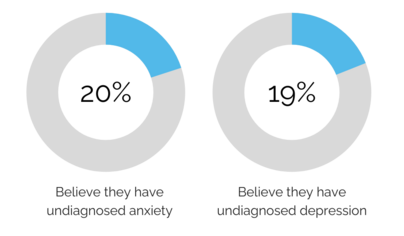
An alarming 40% of Americans suspect they may have an undiagnosed brain health condition. Among those, anxiety (20%) and depression (19%) are the most commonly suspected conditions. These two conditions alone highlight a substantial burden of mental health issues that may be unaddressed.
Top reasons for lack of diagnosis for brain health conditions:
BRAIN HEALTH IN HEALTHCARE
Other notable obstacles include a lack of awareness of diagnostic options and the stigma surrounding brain health issues. Additionally, logistical challenges such as limited local availability of diagnostic tools and lengthy wait times for appointments contribute to the reluctancy to seek diagnosis and care. Despite these issues, 17% of respondents report no barriers, indicating varied experiences with accessing brain health services. The findings underscore the need for more accessible and affordable diagnostic services, as well as increased awareness and de-stigmatization of brain health conditions.
Source: Muse 2024 Brain Health Survey
Reason
BRAIN HEALTH IN HEALTHCARE
Emotional support at home is inadequate according to many who have a diagnosed and/or undiagnosed brain health condition. This is likely why many reported frequently feeling lonely (60%). Additionally, 38% of individuals highlight the absence of a quiet and stress-free environment as a barrier to maintaining their brain health, a further indication of challenges when it comes to managing their condition while at home.
Key areas where support is lacking:
Source: Muse 2024 Brain Health Survey
BRAIN HEALTH IN HEALTHCARE
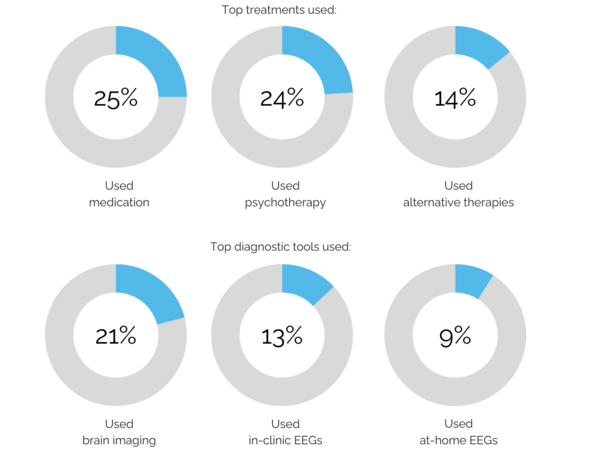
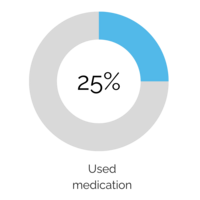
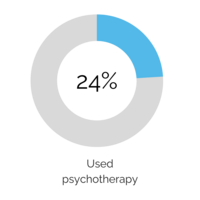
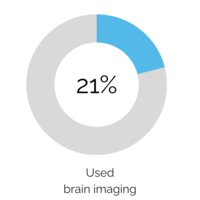
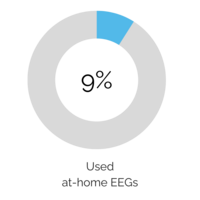
The findings show that nearly half of respondents (44%) have not been evaluated or received treatments. Among those who have, medication (25%) and psychotherapy (24%) are the leading methods, highlighting the reliance on these traditional approaches. Advanced diagnostics like brain imaging had been used by 21% of respondents.
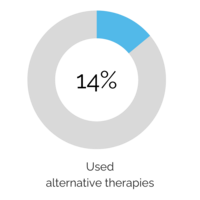
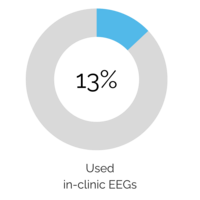
Alternative therapies and in-clinic EEG sessions show moderate usage, while at-home EEG devices and neurofeedback sessions are less common. This underscores the diverse but selective engagement with brain health treatments and the need for broader awareness and accessibility.
Source: Muse 2024 Brain Health Survey
The survey revealed that when it comes to the use of digital wellness tools, fitness and activity trackers lead in popularity, with 30% of respondents using such devices. Meditation and mindfulness apps follow at 26%. Brain training and sleep tracking apps also show notable usage, at 21% and 19% respectively.
Despite the variety of available tools, 21% of respondents report not using any digital tools for brain health, pointing to potential gaps in awareness or accessibility. Other specialized tools like cognitive behavioral therapy apps and neurofeedback devices have lower usage rates.
BRAIN HEALTH IN HEALTHCARE
Source: Muse 2024 Brain Health Survey
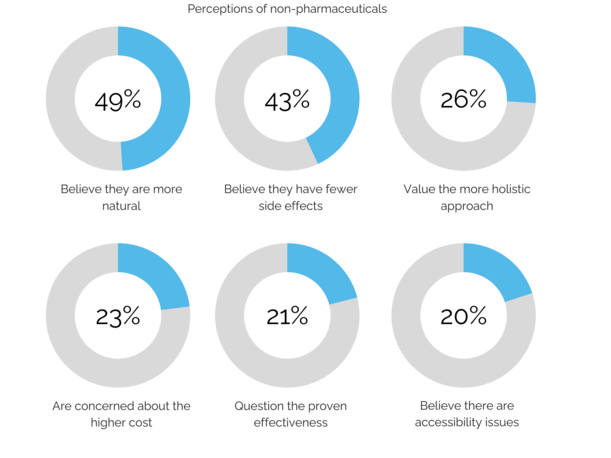
A significant 49% view these treatments as more natural, and 43% appreciate the fewer side effects compared to traditional medical treatments. The holistic approach is valued by 26% of respondents, indicating a preference for comprehensive wellness strategies.
However, 21% question the proven effectiveness of non-pharmaceutical options. Accessibility issues (20%) and higher costs (23%) are also noted as challenges which may be why so few are turning to non-pharmaceuticals and alternative therapies despite the positive perception of them.
Source: Muse 2024 Brain Health Survey
BRAIN HEALTH IN HEALTHCARE
While Americans are widely worried about factors affecting brain health, such as aging (81%), stress (77%), and poor sleep (73%), these concerns don't fully align with the most effective methods for brain health improvement. Despite recognizing the influence of lifestyle and aging on cognitive well-being, less attention is paid to diet, which is actually the top factor for brain health enhancement.
Meanwhile, concerns about sedentary lifestyles (62%), technology use (58%), and social support (56%) indicate an awareness of the role of physical activity, nutrition, digital habits, and social connections in brain health. This suggests a need for comprehensive health strategies that address both the biological and lifestyle factors in maintaining cognitive health, with a particular focus on countering the impacts of aging, stress, and sleep issues.
With the demonstrated efficacy of neurofeedback devices in improving brain health metrics, a broader recommendation for accessible consumer-grade devices like the Muse S is essential. These tools have shown promise in enhancing focus, sleep quality, and overall wellbeing. By making such technologies part of the mainstream conversation around mental wellness, individuals can take a proactive and personalized approach to their brain health.
Lifestyle changes, including healthy eating, regular exercise, social engagement, sleep and meditation play a pivotal role in brain health. Public health initiatives and educational campaigns should emphasize these factors, encouraging individuals to adopt brain-healthy lifestyles.
With Gen-Z scoring the lowest in self-reported brain health due to stress and loneliness, targeted interventions are critical. Educational institutions and workplaces should provide robust support systems and mental health resources tailored to the needs of younger individuals.
The lack of emotional and practical support at home for those with brain health conditions calls for enhanced at-home care solutions. Increased awareness of the importance of brain health and access to support services and increased access to support services are vital in creating a nurturing environment for those affected.
As interest grows in non-pharmaceutical treatments, further research and validation are necessary to provide balanced and evidence-based options to patients. Efforts should also focus on making these treatments more accessible and affordable, addressing concerns about their effectiveness and cost.
The data underscores the pressing need to prioritize brain health, with a significant portion of Americans reporting diagnosed and undiagnosed conditions. Policies should focus on increasing funding for mental health services, reducing stigma, and improving the accessibility and affordability of diagnostic services.
The 2024 Muse Brain Health Study was meticulously designed in collaboration with Pollfish, a renowned survey provider known for its demographically representative audience and reliable data collection methods. The study replicated the methodology of the 2022 Brain Health Report, with enhancements to encompass a broader scope of brain health aspects.
Survey Sample and Data Collection:
Sample Size and Demographics: The survey was conducted with a sample of 5,000 U.S. adults, carefully selected to ensure a representative cross-section of the population. This demographic representation was achieved through Pollfish's advanced sampling techniques, which include a stratified sampling method to match the U.S. Census data on key demographic variables such as age, gender, region, and socio-economic status.
Survey Period: The data collection occurred over a four-day period, from January 19th to 22nd, 2024, allowing for sufficient time to gather a wide range of responses and reduce potential biases associated with shorter collection periods.
Survey Focus and Design:
Key Brain Health Aspects: The survey maintained its focus on self-reported scores across seven key brain health aspects identified in the 2022 report: memory, focus, sleep, mood, productivity, creativity, and overall wellbeing on a scale of 1-10. These aspects were chosen for their relevance and impact on overall brain health and quality of life.
Expanded Scope: In addition to the original aspects, the 2024 survey included questions related to brain health conditions and medical and healthcare aspects. This expansion was intended to provide a more comprehensive understanding of brain health by integrating lifestyle factors with clinical insights.
Questionnaire Design: The questionnaire utilized a mix of quantitative scales (such as Likert scales for self-reported health scores) and qualitative questions for deeper insights.
Data Analysis and Reporting:
Analytical Methods: The data were analyzed using advanced statistical methods to identify trends, correlations, and significant findings. This included descriptive statistics, cross-tabulation analysis, and regression models where appropriate.
Quality Control: Pollfish's quality control mechanisms, including attention checks and data consistency algorithms, were employed to ensure the integrity and reliability of the survey responses.
Ethical Considerations and Compliance
Informed Consent: All participants were provided with a clear explanation of the study's purpose and assured of their anonymity and confidentiality. Informed consent was obtained prior to participation.
Compliance with Standards: The study adhered to ethical standards and guidelines for research involving human subjects and complied with relevant privacy laws and regulations.In summary, the methodology of the 2024 Muse Brain Health Study, in partnership with Pollfish, was designed to provide robust, reliable, and comprehensive insights into the state of brain health in America, leveraging both traditional and innovative approaches to survey design and data analysis.
The concept of "brain health" encompasses a wide range of definitions and inclusions of various elements of brain functions that contribute to health and wellbeing. Those referenced in the development of Muse's six criteria of brain health are included below:
1 Brain Health is defined by the World Health Organization as "the state of brain functioning across cognitive, sensory, social-emotional, behavioural and motor domains, allowing a person to realize their full potential over the life course, irrespective of the presence or absence of disorders." [Source]
2 The Lancet, Neurology Journal adds to the prior definition of the World Health Organization, explaining brain health as a "a state of complete physical, mental, and social wellbeing through the continuous development and exercise of the brain." [Source]
3 The Center for Brain Health defines brain health as an active term for management of one's wellbeing, describing brain health as "making the most of your capacity to thrive in life." Their research shows that better brain health helps people thrive within the context of their personal life. [Source]
About MuseĀ® by Interaxon Inc.:
Muse is pioneering brain health through its industry-leading EEG measurement and neurofeedback platform, built on advanced AI algorithms. Muse spearheads decentralized research initiatives aimed at enhancing mental health therapies, optimizing sleep, and advancing neuroscience development. Its AI platform unites researchers, developers, and consumers worldwide and is supported by over 200 research studies from renowned institutions, including the Mayo Clinic, NASA, and Harvard. Muse has collected and decoded over 1 billion minutes of brain data to date, which is one of the largest EEG collections in the world. Muse is headquartered in Toronto, Canada, with a subsidiary in the San Francisco Bay Area, California.